

How to Deal With Noisy Central Heating Pipes
Noisy central heating pipes create two linked problems: a mechanical source and an acoustic transmission path through the building. Banging noises, gurgling, rattling, humming and ticking each indicate different causes.
Effective treatment follows a source, path and receiver method. First, correct pressure, flow, trapped air and poor supports. Next, isolate pipework from walls and floors. Then add acoustic lagging, acoustic enclosures or upgraded linings where radiated sound remains.
This guide explains how to fix noise in central heating pipes through safe checks, heating engineering, soundproofing and vibroisolation for UK homes and commercial properties.
Key Takeaways and Quick Wins
- Identify the sound and timing. Knocks at start-up often indicate thermal movement. Gurgling during circulation points towards air in the system. Whooshing near a valve suggests high water velocity or poor balancing.
- Check radiator air and system pressure first. Bleeding radiators can clear isolated air pockets. Check the cold pressure against the boiler manual after bleeding.
- Find rigid contact points. Pipes that touch joists, floorboards, plaster, brackets or masonry can inject vibration into the structure. Resilient sleeves and correctly selected lined clips reduce this transfer.
- Correct flow before adding acoustic materials. Balancing radiators, reviewing pump operation and checking thermostatic radiator valves can reduce turbulence, cold radiators and uneven heating.
- Treat the whole transmission path. Pipe insulation can soften local contact. Effective heating noise solutions may also require acoustic lagging, penetration treatment, an independent enclosure or a resilient wall or ceiling lining.
- Change one variable at a time. Monitor each adjustment over three complete heating cycles. This process preserves diagnostic evidence and shows which measure produced the improvement.
- Use the right specialist. A heating engineer corrects hydraulic and mechanical faults. An acoustician diagnoses airborne, structure-borne and flanking transmission, then specifies soundproofing and vibration isolation.
Common Types of Central Heating Pipe Noise
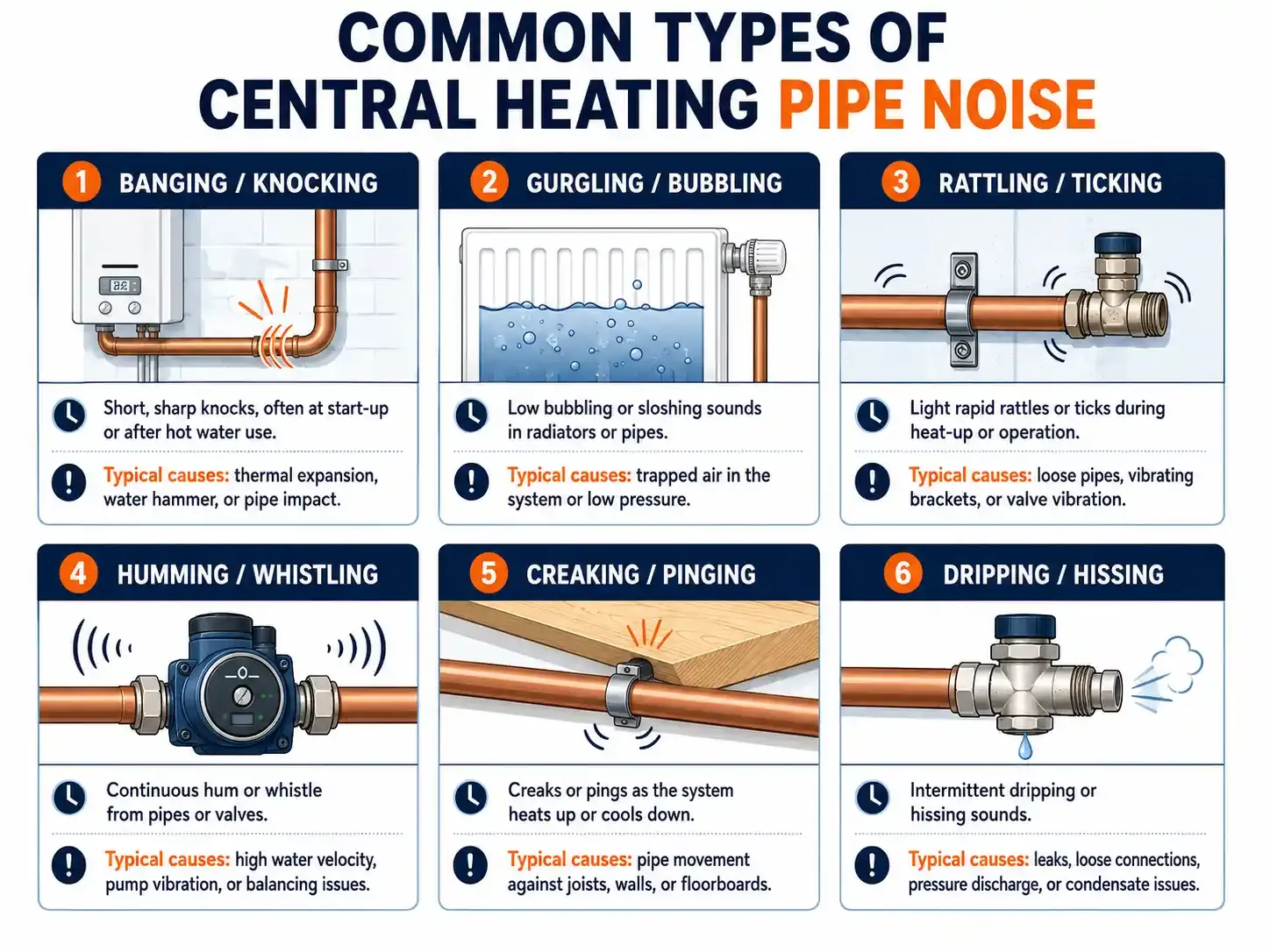
Central heating systems can produce several distinct noises, and the character of the sound often gives the first clue to its cause. Pay attention not only to what the noise sounds like, but also to when it occurs - for example, during start-up, while the system is heating, when a radiator is running, or after hot water has been used.
The most common sounds include:
- Banging or knocking: Short, sharp knocks can occur when pipes expand as they heat, when pipework moves against surrounding materials, or because of water hammer.
- Gurgling or bubbling: Bubbling and sloshing sounds in radiators or pipes can indicate trapped air in the system or, in some cases, low system pressure.
- Rattling or ticking: Rapid rattles or ticks during heating can be associated with loose pipework, vibrating brackets or movement around valves and fittings.
- Humming or whistling: A continuous hum or whistle may point to high water velocity, pump vibration, valve behaviour or a system that requires balancing.
- Creaking or pinging: Pipes naturally expand and contract as their temperature changes. Noise can occur when this movement causes the pipe to rub against joists, walls, floorboards or clips.
- Dripping or hissing: These sounds deserve closer attention because leaks, loose connections, condensate problems or pressure discharge can produce similar symptoms. Visible water or persistent dripping should be investigated promptly.
The timing of the sound can narrow the possibilities considerably. A noise that appears only as the heating starts is likely to have a different cause from one that continues throughout operation or appears after the boiler shuts down.
How Heating Pipe Noise Travels Through a Building
Heating pipe noise reaches a room through several paths. The loudest path often sits away from the original source, which explains why a small pipe contact can sound like a problem inside a wall or ceiling.
Airborne Sound
A vibrating pipe, pump, valve or boiler casing radiates pressure waves into the surrounding air. Cupboards, risers and lightweight boxing can contain and amplify this energy. Gaps around access panels and service penetrations then release sound into occupied rooms.
Sound absorption inside a cavity reduces reflections. Sound insulation requires mass, airtightness and mechanical separation. These functions solve different parts of the problem.
Structure-Borne Sound
Vibrations in pipes pass into clips, brackets, joists, masonry and plasterboard. These building elements act as secondary radiators because their larger surface area moves more air than the pipe. Structure-borne transmission often makes rattling noises or humming noises audible several rooms away.
Vibroisolation reduces mechanical energy transfer at the connection point. A resilient support works when its dynamic stiffness, temperature rating and load range suit the pipe or equipment.
Flanking Transmission and Resonance
Sound can bypass the direct route through connected floors, partitions, service voids and continuous framing. This process is called flanking transmission. A lightweight panel, radiator cover or pipe box can also resonate at a particular frequency and increase audible sound.
A successful acoustic treatment controls the source, breaks rigid connections and limits radiation from receiving surfaces. Thin foam mainly controls higher-frequency reflections, while low-frequency hum responds more strongly to hydraulic correction, decoupling and added mass.
Why Central Heating Pipes Become Noisy
Central heating pipe noise usually develops when heat, water flow, pressure changes or mechanical movement interact with the pipework and surrounding building structure. The sound itself can provide useful clues, but the timing of the noise, where it is heard and what the system is doing at the time are often just as important.
The main causes fall into four broad groups: thermal movement, trapped air and flow issues, hydraulic shock, and restrictions caused by sludge or scale.
Thermal Expansion and Pipe Movement
The expansion of copper pipes occurs as hot water raises the pipe temperature. Restricted pipe movement creates knocking sounds, tapping sounds, clanking noises and creaking sounds where the pipe catches against timber, plaster or a rigid clip. The stored movement releases suddenly and excites the surrounding structure.
Correct clearance, sleeves and supports allow controlled movement. Securing loose pipes also prevents impact while preserving axial expansion.
Trapped Air, Pressure and Flow
Signs of trapped air in system pipework include gurgling noises, bubbling and cool radiator tops. Low pressure, recurring leaks or automatic air vent problems can support the same symptom. Recurring air requires investigation of its entry route.
Excessive flow through a thermostatic radiator valve can create whooshing sounds. Poor hydraulic balance can produce radiator performance issues, high local velocity and noisy valves while remote radiators receive limited flow.
Water Hammer and Rapid Valve Action
Water hammer describes a pressure wave created by a rapid change in water velocity. Water hammering can follow sudden flow reversal at a motorised valve, fast-closing tap or shower control. Record “tap shower use” in the noise log when the bang follows domestic water operation, since shared supports can transmit the event into heating pipework.
An engineer can assess valve closure, pump head, bypass operation, pipe routing and support spacing. This diagnosis separates hydraulic shock from thermal expansion.
Sludge, Scale and Restricted Waterways
Sludge build-up commonly contains corrosion products that settle in low-flow areas. Limescale build-up and hard water deposits can restrict heat exchangers and local waterways, especially where repeated top-ups introduce fresh minerals. Symptoms include kettling, cold spots in radiators, poor circulation and increased pump load.
Cleaning heating system water should follow evidence from temperature patterns, water sampling, magnetic debris and flow checks. Regular heating system maintenance also supports stable pressure, clean water and reliable valve operation.
Flushing central heating may involve a manual flush, chemical clean, magnetic process or power flush under BS 7593:2019+A1:2024.
Safety Checks Before Investigating Pipe Noise
Before checking the source of a pipe noise, make the system safe to inspect. Some basic checks can be carried out by the homeowner, but work involving gas appliances, boiler internals or commercial plant should be left to suitably qualified professionals.
Usual steps to follow include:
- Switch the heating off and let the system cool. Allow pipes, radiators and other accessible components to cool before bleeding radiators, checking clips or touching exposed pipework.
- Check system pressure only as instructed by the manufacturer. Follow the appliance manual for pressure checks and filling procedures. Sealed domestic central heating systems commonly operate at around 1 to 1.5 bar when cold, but the manufacturer’s stated range should always take priority.
- Do not remove the boiler casing or work on gas components. Boiler casing removal, combustion components, gas valves, flues and gas-carrying parts should be handled by a Gas Safe registered engineer with the correct appliance qualification.
- Treat a suspected gas leak as an emergency. Open doors and windows, avoid electrical switches and naked flames, leave the property and contact the regional gas emergency service.
- Use additional precautions on commercial systems. Commercial heating systems require authorised isolation, site coordination and competent contractors. Larger pumps, shared plant and building management controls introduce additional operational risks.
Once the system is safe to assess, you can begin matching the noise to its likely source. Keep the investigation limited to accessible, non-gas components unless the appliance manufacturer or a qualified engineer instructs otherwise.
How To Fix Banging, Gurgling, Rattling and Humming
The right fix depends on the type of noise and when it occurs. Banging often points to pipe movement, gurgling to trapped air or circulation issues, and rattling or humming to loose components, vibration or excessive flow. Start by matching the sound to the system condition, then check the most likely accessible cause.
Banging and Knocking
Listen along accessible runs during heat-up and cool-down. Inspect joist penetrations, radiator tails, floorboard edges and rigid brackets. Use correctly sized resilient-lined clips, sleeves or grommets where contact occurs, and tighten brackets according to the fixing manufacturer’s guidance.
A lower flow temperature can reduce the rate of thermal movement. Around 60°C provides a practical trial point for many combi boilers when rooms still reach target temperature. A conventional boiler serving a hot-water cylinder generally retains a minimum 65°C setting for safe cylinder heating.
Gurgling and Bubbling
Switch the heating off, allow the radiator to cool, open the bleed valve slowly and close it when water flows steadily. Check system pressure afterwards. Recurring air calls for leak checks, expansion vessel assessment, vent inspection and pressure testing.
A cool radiator top supports an air diagnosis. A cool lower section supports sludge or restricted flow.
Rattling, Humming and Whooshing
Loose supports, vibrating valve heads and lightweight covers can generate rattling. Pump vibration, high differential pressure and restrictive valve positions can create hum or whistle. Boiler humming can also arise from a pump, fan, transformer or control component, while an element issue mainly applies to electric boilers and immersion heaters.
Balancing uses lockshield valves or preset valve bodies to distribute design flow. Heating and Hotwater Industry Council guidance describes a typical 20°C flow-to-return temperature difference for many radiator systems, subject to appliance and system design.
Soundproofing and Vibroisolation Tactics for Heating Pipes
Soundproofing heating pipes starts with controlling how vibration and sound travel into the surrounding structure. Resilient supports, treated penetrations, acoustic lagging, enclosures and vibration isolation can all reduce transmission when they are selected for the specific noise path.
The goal is to separate the pipework from walls, floors and ceilings while preserving safe movement, ventilation and maintenance access.
Use Resilient Supports
A resilient-lined clip separates the pipe from the support while maintaining positional control. Select the lining from verified load, temperature and dynamic stiffness data. Neoprene, ethylene propylene diene monomer rubber and specialist acoustic clips suit different service conditions.
Every rigid bridge reduces the benefit. Screws, metal collars, mortar and compressed insulation can reconnect the pipe to the structure.
Treat Penetrations
A pipe sleeve should provide movement clearance through walls and floors. Fill the surrounding annular zone with a compatible flexible acoustic and fire-stopping system where the construction requires fire resistance. Preserve separation between the pipe and structural opening.
Approved Document E for England gives specific details for pipes crossing separating floors in flats. The illustrated build-ups use an enclosure with at least 15 kg/m² surface mass, 25 mm unfaced mineral wool and flexible fire stopping that prevents rigid pipe-to-floor contact. Projects elsewhere in the UK follow the relevant devolved building standards.
Apply Acoustic Pipe Lagging
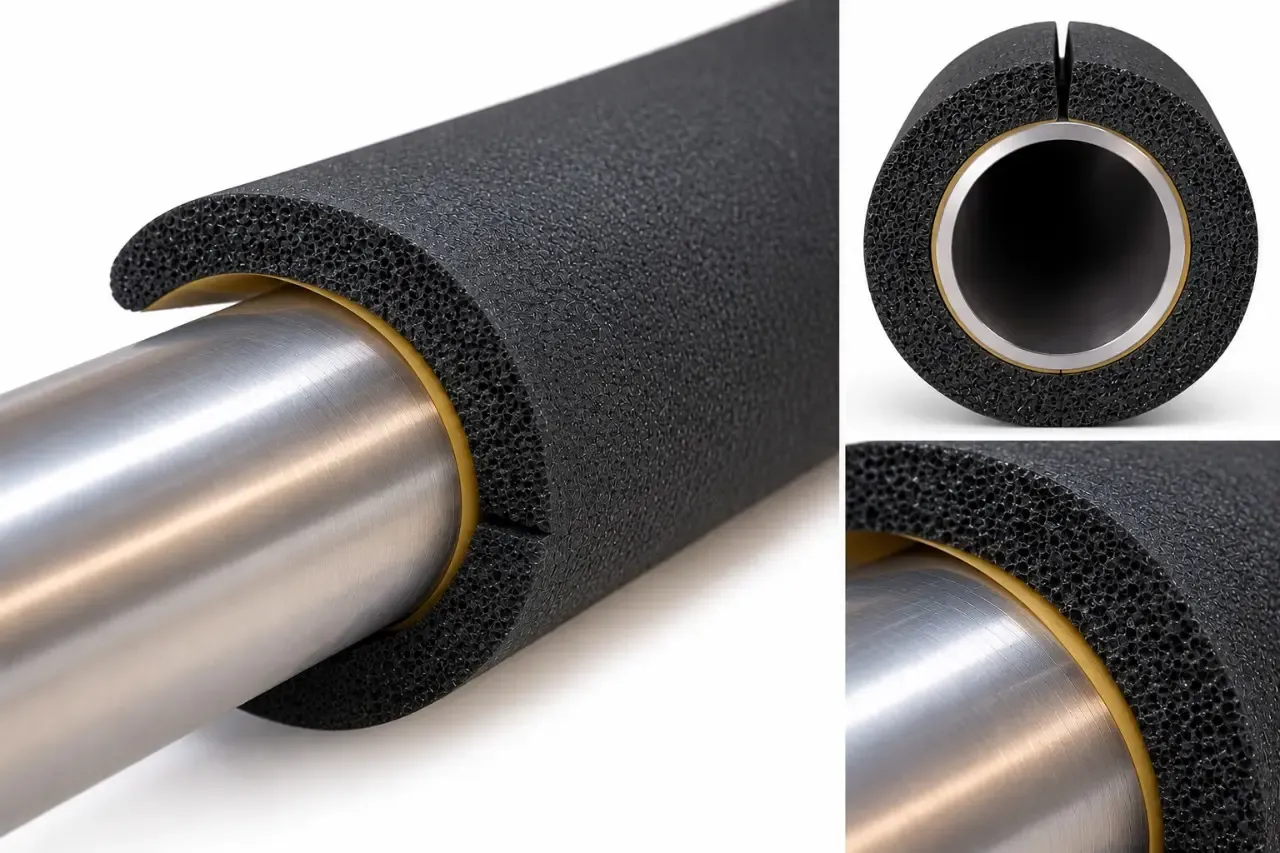
Thermal foam reduces heat loss and can cushion minor contact. Acoustic pipe lagging adds a resilient decoupling layer and a dense barrier to reduce airborne radiation. Continuous coverage, sealed overlaps and careful treatment at valves and supports determine performance.
Choose materials with suitable service temperature, reaction-to-fire classification, vapour behaviour and maintenance access. Acoustic lagging works best after flow, air and vibration faults receive correction.
Build an Acoustic Enclosure
An effective enclosure uses dense boards, a mineral wool cavity, sealed joints and an independent frame. Resilient access panels preserve inspection routes. Ventilation openings may require acoustic treatment where boilers, pumps or electrical equipment release heat.
Mass controls transmission, mineral wool controls cavity resonance, airtightness closes leakage paths, and decoupling limits structure-borne input. Lightweight decorative boxing can increase resonance when it shares rigid fixings with the pipe.
Isolate Pumps and Plant
Floor-mounted pumps and commercial plant may require elastomeric mounts, spring isolators, inertia bases and flexible pipe connectors. Selection follows equipment mass, rotational speed and forcing frequency. Domestic boiler components require heating-engineer intervention.
Where vibration already excites a partition or ceiling, an independent acoustic lining can reduce radiation into the room. This measure follows source control and flanking-path assessment.
A Practical Troubleshooting Sequence
A reliable diagnosis works best when each change is tested separately and the system is observed through a full operating cycle.
Use the following sequence to narrow down the source, distinguish hydraulic or mechanical faults from acoustic transmission, and avoid treating the wrong part of the system:
- Record the sound type, location, duration and operating event.
- Compare start-up, steady operation, valve closure and cool-down.
- Check radiator heat patterns and cold system pressure.
- Bleed isolated air and monitor recurrence.
- Inspect visible clips, sleeves, brackets and building contacts.
- Review radiator balance, valve behaviour, pump operation and flow temperature.
- Assess water quality where cold areas, debris or kettling appear.
- Apply acoustic treatment to the verified transmission path.
- Monitor at least three complete heating cycles after each change.
An acoustician may use octave or one-third-octave sound measurements, contact vibration measurements and controlled operating tests. This separates airborne radiation from structure-borne excitation and identifies dominant frequencies.
BS EN ISO 16032:2024 covers engineering measurement of sound from service equipment, while BS EN 12354-5:2023 provides calculation models for service-equipment sound in buildings.
When to Call a Heating Engineer or Acoustician
Hiring heating engineer services is appropriate for recurring air, repeated pressure loss, leaks, water hammer, pump faults, boiler noise, widespread cold radiators, severe corrosion and system cleaning. Gas appliance work requires a suitably qualified Gas Safe registered engineer.
Call an acoustician when the mechanical fault has been corrected, and intrusive noise remains in bedrooms, meeting rooms, hotel rooms, flats or other sensitive spaces. DECIBEL can map the source and transmission path, measure sound and vibration, and specify clips, sleeves, lagging, enclosures or independent linings.
Commercial projects may also require coordination with fire, mechanical and building-control requirements.
Frequently Asked Questions
What causes banging or knocking when the boiler starts?
Rapid heating can drive thermal expansion against a joist, floorboard, wall penetration or rigid clip. A sharp bang linked to valve closure points towards the water hammer. Timing provides the clearest first distinction.
How do I safely bleed radiators to stop gurgling?
Switch the heating off, allow the radiator to cool and open the bleed valve slowly with a radiator key. Close the valve when a steady water stream appears, then restore pressure according to the boiler manual.
How can I tell water hammer from trapped air?
Water hammer creates a short, sharp event after rapid valve action. Trapped air produces bubbling, intermittent circulation and a cool area near the radiator top. A noise log connects the sound to its trigger.
What pump speed or pressure setting reduces whistling?
The correct setting depends on system resistance, design flow, valve type and boiler controls. A heating engineer can select the lowest setting that maintains full circulation, then verify differential pressure and hydraulic balance.
How do I balance radiators to prevent whooshing?
Balancing restricts flow through radiators that heat quickly and directs water towards slower circuits. Measured lockshield adjustment produces more reliable results because every valve change influences the rest of the system.
Which clips or insulation reduce expansion creaks?
Use pipe clips sized for the diameter, substrate, load and service temperature. Resilient linings, sleeves and compatible acoustic insulation allow controlled movement and reduce vibration transfer into the building fabric.
Can scale or sludge make pipes noisy?
Scale can restrict heat transfer and produce kettling. Corrosion sludge can restrict flow, increase pump load and create uneven radiator temperatures. Water testing and temperature mapping guide the cleaning method.
When is professional intervention the safer choice?
Professional diagnosis suits repeated pressure loss, leaks, recurring air, pump or boiler noise, severe water hammer, widespread circulation problems and concealed structural transmission. Combined heating-engineering and acoustic expertise gives the clearest route for complex cases.
Sources and Technical References
- CIBSE, Guide B4: Noise and Vibration Control for Building Services Systems
- British Standards Institution, BS EN 12354-5:2023, Building Acoustics: Sound Levels Due to Service Equipment
- British Standards Institution, BS EN ISO 16032:2024, Measurement of Sound Pressure Level from Service Equipment in Buildings
- British Standards Institution, BS 7593:2019+A1:2024, Preparation, Commissioning and Maintenance of Domestic Central Heating and Cooling Water Systems
- Ministry of Housing, Communities and Local Government, Approved Document E: Resistance to the Passage of Sound
- Health and Safety Executive and Gas Safe Register, domestic gas safety guidance
- Energy Saving Trust, boiler flow-temperature guidance
- Heating and Hotwater Industry Council, central-heating system balancing guidance
- British Standards Institution, BS 8233:2014, Guidance on Sound Insulation and Noise Reduction for Buildings
- Vaillant and Worcester Bosch, manufacturer guidance on sealed-system boiler pressure